
THE APEX TIMES
Will Smith and the Dodgers’ ABS decisions in NLCS Game 2, explained after Yoshinobu Yamamoto’s rough start
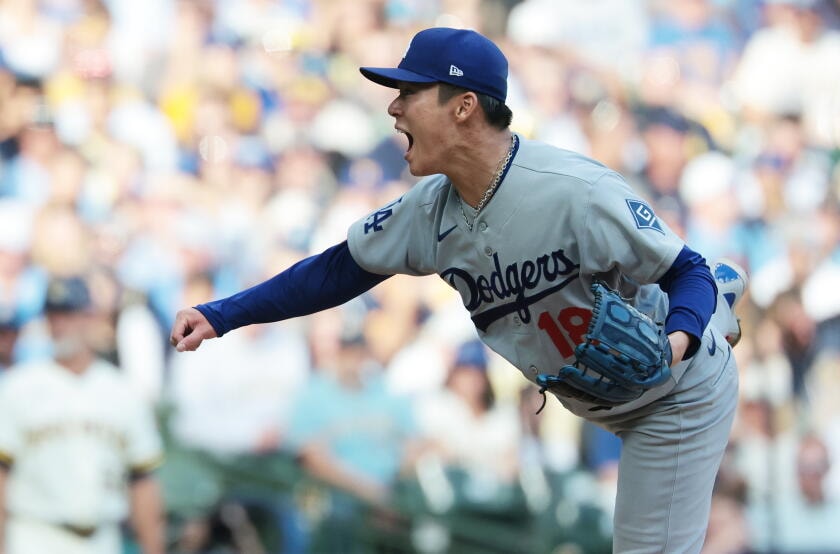
A key part of the Dodgers’ NLCS Game 2 story was not only what Yoshinobu Yamamoto did on the mound, but what he did not get from behind the plate: Will Smith’s use of the Angels of the moment, automatic balls and strikes review challenges.
The Dodgers’ NLCS Game 2 storyline pivoted around Yoshinobu Yamamoto, whose outing landed as a gut punch for Los Angeles and a destabilizing blow for the club’s postseason rhythm. In the middle innings and in the way hitters took over plate leverage, the game looked less like a pitching matchup and more like a psychological shift. But a bigger question followed the start, too: why Will Smith did not lean on the Dodgers’ ABS challenge options when it might have steadied the strike zone in real time.
ABS challenges are meant to correct misses by the automated ball-strike system, but they also force teams to decide when the marginal benefit outweighs the cost of losing a challenge. In the abstract, a catcher’s job is to transmit trust to the pitcher and keep the opponent from getting comfortable. In this case, the Dodgers’ call did not align with how many fans have grown used to seeing elite catching tandems use review opportunities to alter momentum.
The attention on Smith is partly about timing and partly about how recently the league has normalized a particular kind of catcher behavior during postseason at-bats. The Yahoo Sports discussion framing the question argues that teams can be reluctant to spend challenges when they are trying to keep a pitcher on routine, but in a moment when Yamamoto’s performance became a detriment, the Dodgers needed every chance to smooth out the zone early.
This matters because ABS challenges do not just affect one batter. They can change a pitcher’s sequencing, how quickly a staff reaches for its “next” pitch, and how comfortable hitters are with the strike boundary. When a starter gets rattled, the most direct tools are usually mound visits and adjustments in pitch selection. A challenge is different, it is external. It attempts to reset the environment before the body language does.
Even without claiming that a single pitch would have flipped the outcome, the broader baseball point remains: postseason games punish hesitation. If Smith held the challenges back, it likely reflected a strategic calculation about what the Dodgers expected next, how many looks they might get later, and whether Yamamoto’s command could self-correct without interference. The critique in this case is that, given how Yamamoto’s night unfolded, the Dodgers’ “wait and see” approach may have been too conservative.
What to watch next is whether Los Angeles treats ABS decisions as a clearer lever in subsequent postseason plate appearances, especially if Yamamoto or another high-leverage pitcher struggles with command. Catchers do not get to reverse time, but they do learn quickly from the first few innings of a playoff series, and the Dodgers’ next NLCS game will show whether this Game 2 debate becomes a real adjustment rather than a one-off talking point.
For now, the key takeaway is that Game 2’s turning point is being examined in two layers. The first is the obvious one, Yamamoto’s performance and what it did to the Dodgers. The second is the less visible lever behind it, whether Smith’s ABS approach matched the urgency of the moment. In October, those decisions often feel small until they are not.
Why It Matters
- ABS challenges can influence not just a single at-bat but also pitch sequencing and hitter comfort in the middle of an inning.
- In a postseason series, earlier zone corrections can prevent a starter’s command from tightening into predictable patterns.
- If the Dodgers change how Smith manages ABS usage, it could affect how quickly the club stabilizes when a pitcher’s first inning does not go to plan.
- The debate also highlights how playoff strategy increasingly involves real-time decision-making behind the plate, not just pitching changes.
Key Facts
- Yahoo Sports focused attention on why Dodgers catcher Will Smith did not use the team’s ABS review challenges during NLCS Game 2.
- The column ties the questioning to a rough start by Dodgers pitcher Yoshinobu Yamamoto and the ripple effects on Los Angeles’ postseason posture.
- The discussion centers on the strategic tradeoff between spending ABS challenges early versus saving them for later.
- The example presented is framed against how fans have come to expect frequent catcher use of challenges in recent weeks.
- The article treats the catcher’s decision-making as part of the broader momentum swing in the NLCS matchup.