
THE APEX TIMES
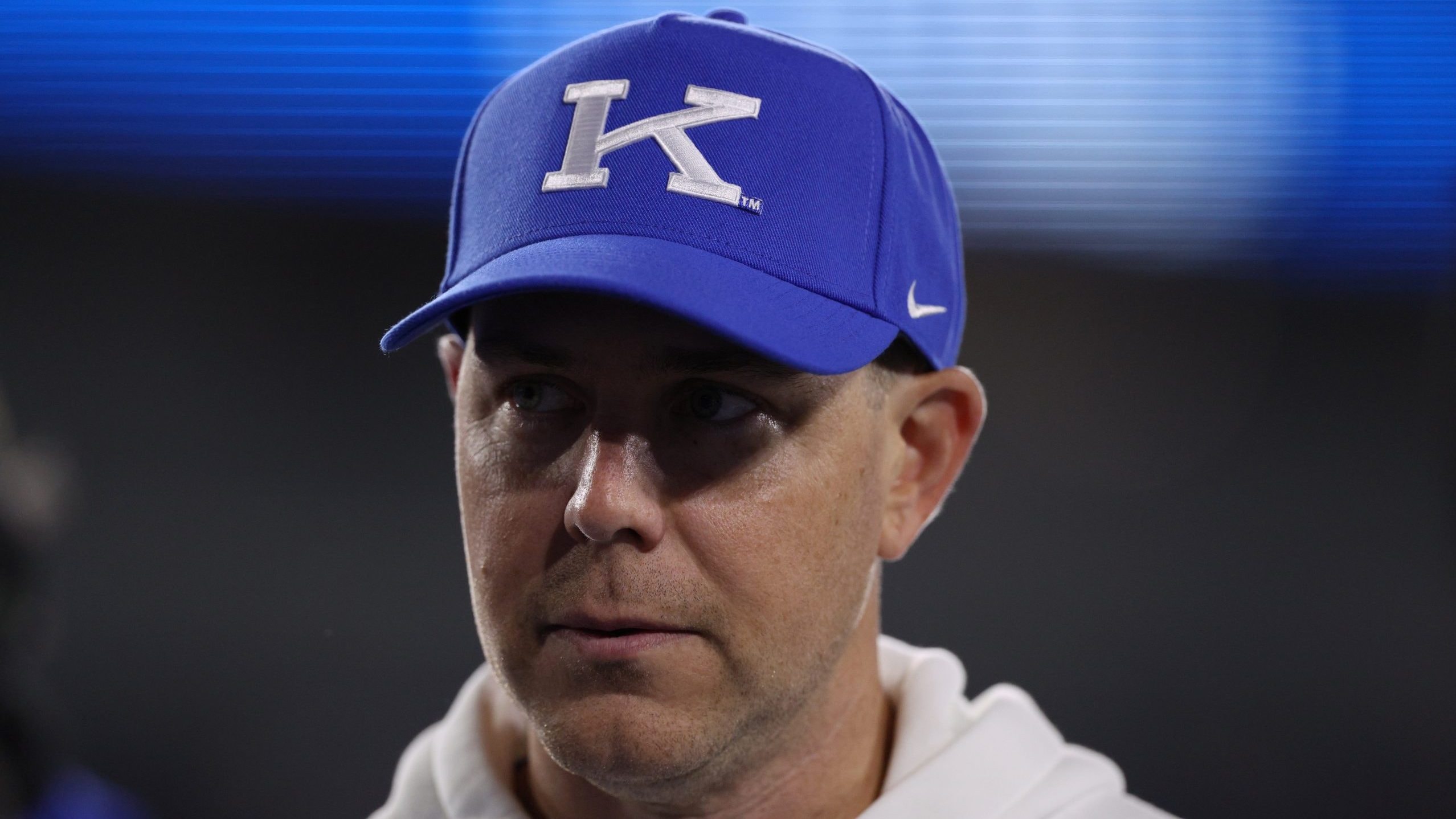
Will Stein explains why Kentucky went for two late vs. LSU
Kentucky head coach Will Stein said his end-of-game decision against LSU came down to a simple mindset and a clear plan when the game tightened.
Kentucky’s coaching staff made a high-leverage call late against LSU, and Will Stein addressed it in the clearest terms he could. After the Wildcats’ win over the Tigers, Stein explained his decision to go for two, using an unusually short, four-word answer to describe the thinking behind the moment.
In that explanation, Stein framed the play as an extension of the team’s approach rather than a reaction to the situation alone. The reported takeaway was that Kentucky’s plan did not change just because the game reached the kind of late-game fork where “play it safe” is the default instinct.
The choice to attempt a two-point conversion carries obvious risk because it directly affects the margin and the time left for the opponent to respond. At the same time, it can be a way to avoid giving the other team options that come from a smaller lead. Stein’s remarks, as described in coverage, treated the decision as a deliberate preference for clarity, not hesitation.
Kentucky’s end-of-game decision also fits the broader football logic that coaches often use when they have practiced answers for specific down-and-distance and scoring-phase scenarios. A two-point attempt is rarely random. It usually reflects what the staff believes the offense can do repeatedly under pressure and how the defense plans to manage the opponent’s next possession.
The fact that Stein’s explanation reportedly came down to “four words” matters in a different way too: it suggests the staff had already decided how it wanted to handle late-game math before it ever stood in the huddle. Instead of presenting it as a last-second gamble, Stein’s framing pointed to preparedness and conviction.
For Kentucky fans, the bigger implication is that this kind of late-game boldness tends to influence how teams treat their remaining possessions. When a program is willing to use two-point attempts at meaningful times, it can reshape the tempo of late drives, because both teams understand that the lead can change quickly depending on what the next conversion produces.
For LSU, the contrast is just as relevant. When an opponent goes for two and converts, it can remove the comfort of certain comeback pathways that exist when the deficit is kept to a single score. Even if a two-point play does not work out, the decision can still force LSU to defend against scenarios where Kentucky controls the scoreboard with one fewer possession worth of uncertainty.
Why It Matters
- It highlights Kentucky’s late-game philosophy and willingness to use high-leverage conversion attempts rather than defaulting to conservative play.
- The decision can shift the psychological and tactical balance in closing drives, because opponents must account for faster swings in the score.
- It may influence how Kentucky prepares similar late-game sequences, emphasizing practiced answers for conversion phases.
- For LSU, the outcome of the two-point decision affects the structure of comeback possibilities late in the game.
Sources
Key Facts
- Kentucky head coach Will Stein explained his decision to go for two against LSU after the Wildcats’ win.
- Stein’s explanation was reported as a four-word answer.
- The remarks focused on the mindset and planning behind the late-game choice rather than treating it as a spur-of-the-moment reaction.
- A two-point attempt is a late-game leverage decision because it directly changes the score margin and the opponent’s subsequent options.
- The end-of-game choice is presented as part of Kentucky’s broader, deliberate approach to late scoring phases.