
THE APEX TIMES
Yahoo 2026 Fantasy Football Strategy: Using ADP vs. XRank to Find Positional Value
A closer look at how Yahoo’s default “XRank” blend of analyst rankings can differ from average draft position (ADP), and how drafters may use both indicates to build a more balanced fantasy roster.
Yahoo’s fantasy draft environment has become more than a simple countdown of “best player available.” Ahead of 2026 fantasy football drafts on Yahoo, a Yahoo Sports piece argues that many online leagues are effectively drafting from Yahoo’s default positional board labeled “XRank,” rather than relying on average draft position (ADP) alone.
According to the Yahoo Sports guide, XRank is a composite ranking built from the rankings of six Yahoo analysts plus the rankings from RotoWire. That matters because it means your leaguemates are not necessarily seeing the same player evaluation you get when you click through to ADP, and the board can shift as Yahoo updates projections and rankings over time.
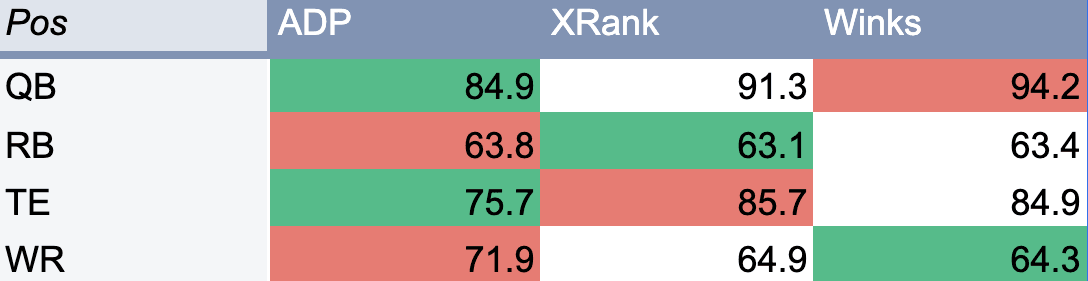
The practical question for drafters, as the article frames it, is how to translate those differences into roster construction. ADP can tell you where players are being taken in other drafts, but it does not explain whether that player is being selected earlier because of consensus value, hype, or scarcity at a position. XRank, by contrast, is intended to reflect an aggregated view of how multiple evaluators expect players to perform, which can create opportunities when the rankings and ADP diverge.
The Yahoo Sports piece also discusses a comparative approach: by looking at ADP versus XRank for individual positions and player tiers, drafters can identify “positional value” gaps. In other words, if a player’s XRank suggests he should be higher than his ADP, he may represent a relative bargain; if the opposite is true, he may be at risk of being over-selected relative to the crowd.
Because draft boards on Yahoo can be dynamic, the guide implies that sticking rigidly to a single tool can be a mistake. If your league is using the default XRank as the draft “engine,” then pairing it with an occasional ADP check can help you spot where your leaguemates’ timing may be drifting away from the broader ranking consensus.
This is ultimately still a fantasy football process, not a scouting report. The Yahoo article is focused on draft mechanics and decision-making, and it does not rely on any college football-specific recruiting or roster claims. For college football fans, the connective tissue is indirect: many fantasy players are drawn from the college pipeline, but the story here is about how to draft using Yahoo’s ranking framework rather than about on-field college impacts.
Why It Matters
- Fantasy drafts can be influenced by what appears as the default board, not what drafters think they are using.
- When XRank and ADP disagree, draft timing can create market inefficiencies that affect roster balance.
- Understanding Yahoo’s ranking composition can help drafters calibrate how consensus-based the board is.
- For league strategy, the key is not only who you draft, but when you target them relative to how the crowd selects players.
Key Facts
- Yahoo’s 2026 fantasy football drafts on Yahoo use a default positional ranking labeled “XRank.”
- XRank is described as a blend of rankings from six Yahoo analysts and rankings from RotoWire.
- ADP is available to drafters on Yahoo, but the article notes it requires clicking over, suggesting many drafters may lean on XRank first.
- The guide’s core method compares ADP versus XRank to spot relative value at positions.
- The article emphasizes that Yahoo’s rankings are updated over time, so the default board can shift as more information is gathered.