
THE APEX TIMES
Yahoo Fantasy leans on projection consensus to flag the 2026 ADPs it thinks are most mispriced
Fantasy analyst Hayden Winks’ 2026 review compares projected production with Yahoo’s average draft position to separate upside targets from likely overpays, position by position.
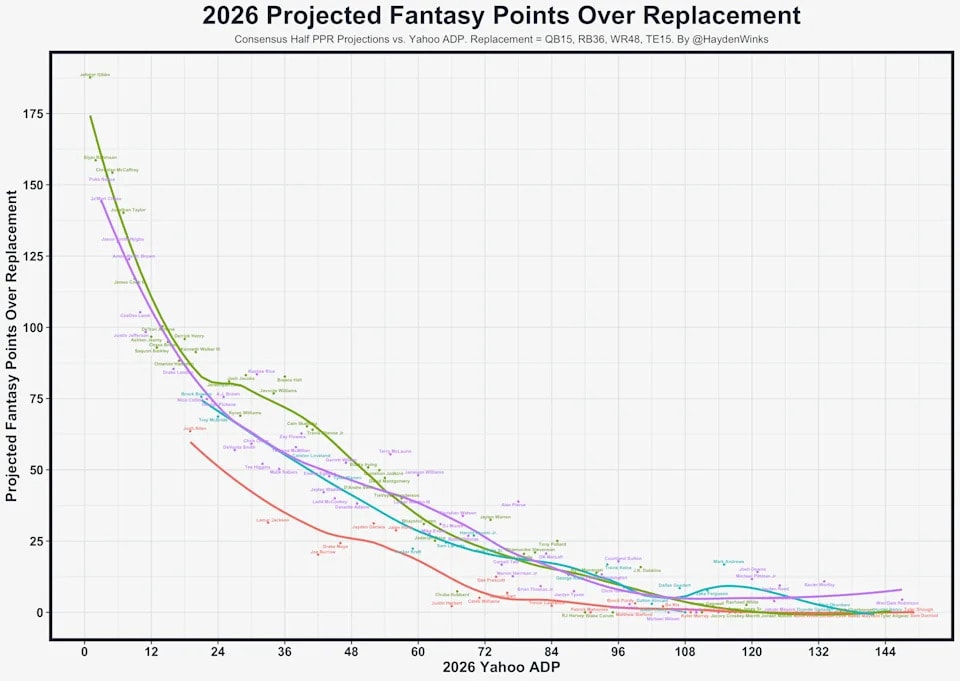
Yahoo Sports fantasy analyst Hayden Winks is making a case for treating average draft position, or ADP, as a starting point rather than an answer for 2026. In an update published Tuesday, Winks outlines how he uses player projection work to identify places where drafts may be pricing in too much or too little value, based on where players are being taken on Yahoo Fantasy.
The method centers on comparing Yahoo’s ADP ecosystem with projection output, then looking for notable gaps between expected production and where a player is typically selected. Winks argues that if you want to be more confident in projections, you should lean on consensus rather than any single model, because consensus helps smooth out model-specific assumptions about roles, efficiency, and game environments.
Winks also points to Yahoo Fantasy’s access to consensus projections produced through its Fantasy Plus partners. The practical pitch is that a “multiple-model” view can reduce the whiplash that sometimes comes from one projection set overreacting to a narrative or an injury recovery timeline. From there, the analysis is used to categorize ADPs as “best” or “worst” relative to projection-based expectations.
Importantly, this is not a warning about one player so much as a map for where roster-building may go off track. Winks frames the exercise as a position-by-position guide, aiming to inform how managers should think about the draft at each spot, including which positions tend to provide more repeatable value when projection-to-ADP gaps are largest.
For fantasy players, the takeaway is process-oriented. ADP is influenced by popularity and perceived scarcity, while projections are designed to estimate outcomes. When those two diverge meaningfully, it can report that a player is being undervalued or overvalued relative to what projection consensus expects to happen on the field.
There are limits, as with any projection-driven approach. Projections depend on assumptions that can shift quickly with training camp roles, preseason usage patterns, and late roster decisions. So even if an ADP looks attractive or risky by projection consensus today, the gap can narrow or reverse if a player’s real-world workload or team context moves differently than expected.
Going forward, managers who want to use this kind of framework should watch whether Yahoo’s projection outlook and draft-market behavior keep moving together as August information becomes more concrete. If the projection-to-ADP gap shrinks for players labeled “best” or “worst,” that’s often a sign the market is correcting. If it persists, it suggests the draft still may not be fully aligned with what the projection consensus anticipates.
Why It Matters
- ADP is often where fantasy value is won or lost, and projection-to-ADP gaps can reveal when popularity diverges from expected production.
- Using consensus projections is a strategy to reduce the impact of any one model’s bias in predicting roles and efficiency.
- Position-by-position draft guidance can change how managers prioritize roster construction, especially in leagues with different starting lineups.
Sources
Key Facts
- Hayden Winks published a Yahoo Sports fantasy update focused on 2026 ADP values.
- The analysis compares Yahoo’s average draft position with projection-based expectations for player value.
- Winks emphasizes consensus projections, describing Yahoo Fantasy consensus projections from Fantasy Plus partners.
- The goal is to identify which ADPs may be most mispriced, described as best and worst relative to projections.
- The update also aims to provide guidance on where to draft each position in 2026.