
THE APEX TIMES
Yankees are giving Roderick Arias another long look, betting on the tools behind the struggles
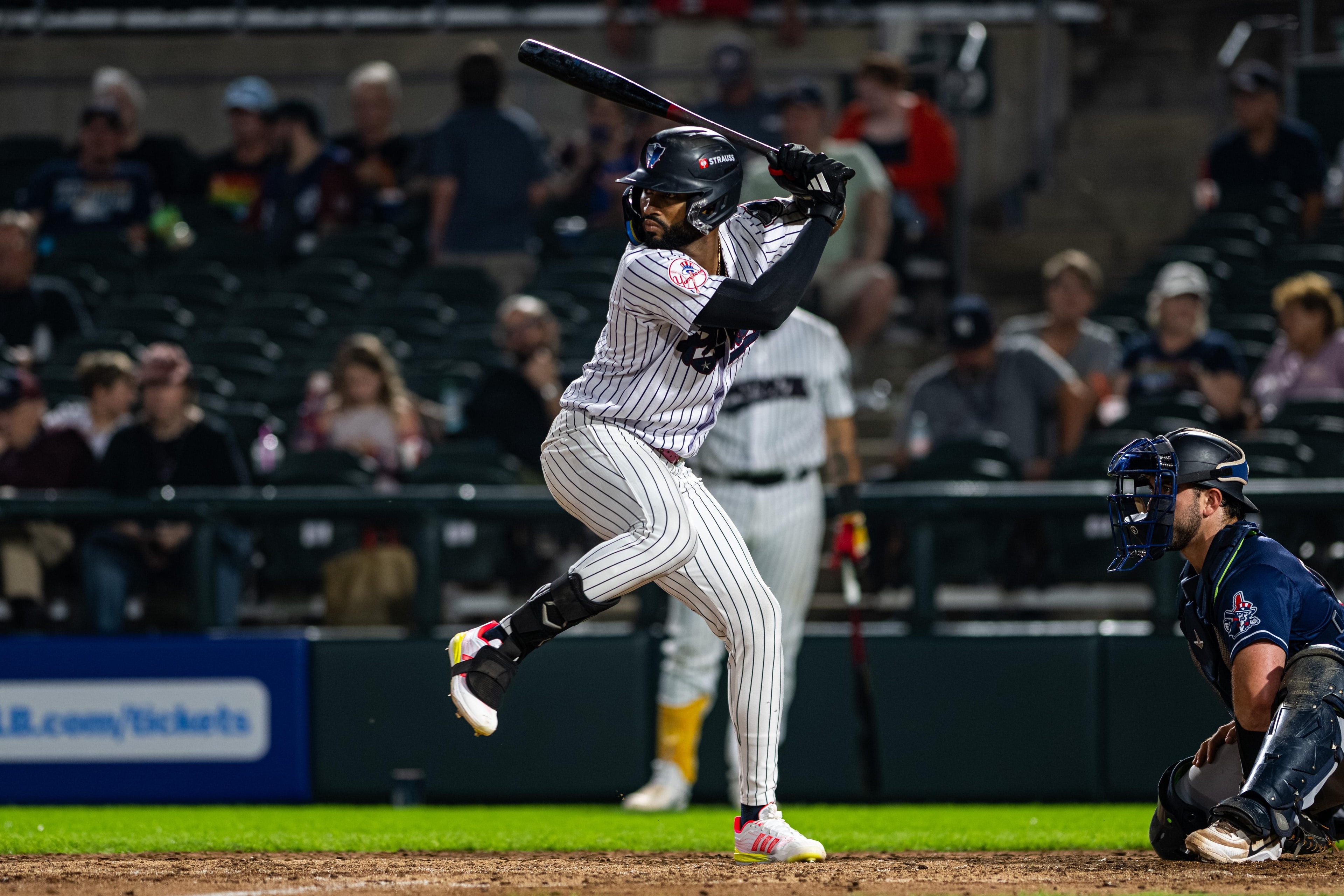
After a rocky first two pro seasons shaped by wrist and thumb trouble, the Yankees prospect Roderick Arias is starting to show signs of payoff that match the promise that originally drove a $4 million signing bonus in January 2022.
The Yankees have never lacked patience for young talent, but they have had to be especially careful with the development timeline of Roderick Arias. A prospect once rated among the more intriguing arms-and-bat profiles in the Yankees pipeline, Arias has spent the early part of his professional career fighting through a pair of injuries and a long stretch of offensive inconsistency. Recent reports suggest that, finally, the organization is seeing more of what it expected when the club signed him in January 2022 for a $4 million bonus.
Arias’ path through the minor leagues has been shaped by health setbacks that affected both his body and, by extension, his rhythm at the plate. The latest account describes wrist and thumb injuries as near-defining forces during his first two seasons, with those problems effectively undercutting the normal learning curve that prospects rely on. For hitters, wrist and thumb stability is not a minor detail. It influences bat speed, swing mechanics, and the ability to stay on plane through contact, so the “smooth progression” many teams hope to see often becomes impossible when those structures are compromised.
Even when Arias has been able to get on the field, the report indicates his performance has not always matched the prospect label. It characterizes his early production as wildly inconsistent, reflected in low batting averages alongside high strikeout totals. That combination is familiar to baseball fans, but it tends to be especially hard for organizations to interpret when the underlying cause may be physical rather than purely technical. In other words, a player can look uncomfortable for longer than usual, and development can stall while the swing tries to catch up to a body that is still recovering.
At the same time, Arias has not been a player without reasons to believe. The Yankees prospect is described as having “loud tools,” meaning scouts and evaluators have seen real upside even when results have not landed. That matters because organizations often have to make a judgment call about whether poor statistical output is a temporary byproduct of injury and adjustment, or a more permanent problem with pitch recognition, swing decisions, or contact quality.
This is where the phrase “don’t give up” takes on a practical meaning. The Yankees, according to the report, are finally seeing more from Arias now, suggesting that his offensive development is beginning to reassert itself after the earlier setbacks. The key is that the organization’s belief appears to be moving from potential on paper to something closer to consistent execution in games. That shift can be gradual, and it often happens only after a player’s health stabilizes enough to allow repetition.
For Arias, the next test is not just whether he can have good days, but whether he can sustain competence across stretches and make the minor-league grind look less like a series of resets. Pitching at higher levels tends to expose hesitation, and high strikeout totals can resurface once a hitter’s timing is slightly off. If Arias’ current improvements are tied to better physical comfort and clearer mechanics, the durability of that improvement will likely define how quickly the Yankees can move him toward bigger opportunities.
From the Yankees’ perspective, Arias’ development is part of a larger roster equation. Every organization is constantly searching for controllable players who can contribute in multiple ways, and prospects with real tools are valuable even when their early stat lines are ugly. The club’s willingness to keep investing in his upside reflects a common baseball strategy: differentiate between “developmental delay” and “evaluation failure,” then let the process play out once health and performance align.
The most important thing to watch now is whether this uptick continues over time, not just in brief bursts. Arias’ story has already included wrist and thumb issues that stalled his early pro calendar, so the next chapter will likely be measured in longer-term trends: more on-base value, fewer obvious swing misses, and stronger contact quality as his at-bats begin to match the abilities scouts have identified.
Until there is a fuller statistical breakdown, it is also worth tempering conclusions. One report can capture a shift in scouting impressions, but it cannot replace a comprehensive look at performance across levels and pitch types. Still, the trajectory described here, from injury-riddled beginnings toward renewed production, is exactly the kind of comeback arc baseball teams hope to see from a high-upside signing.
Why It Matters
- Arias’s progression affects the Yankees’ depth of controllable offensive talent, especially if the “tools” can translate into consistent at-bats.
- Health-driven development delays often determine how quickly prospects can be trusted at higher levels, making durability a central storyline.
- A hitter’s early strikeout rate can be difficult to interpret when wrist and thumb issues are present, so continued improvement would carry extra weight.
- If Arias’ current gains prove repeatable, it strengthens the case for the Yankees to keep moving him along the ladder without overcorrecting on results alone.
Key Facts
- Roderick Arias signed with the New York Yankees in January 2022 for a $4 million bonus.
- The report describes wrist and thumb injuries that severely affected Arias during his first two pro seasons.
- Early offensive results have been described as inconsistent, including low batting averages and high strikeout totals.
- The Yankees prospect has been characterized as having “loud tools,” even when production lagged.
- Recent reporting says the Yankees are starting to see more from Arias than in prior seasons.