
THE APEX TIMES
Yankees’ Jose Caballero works through the pitch-timer rule’s “alert in the box” requirement
With MLB’s pitch-timer enforcement tightening the margin for hitters, New York’s utilityman says he is trying to execute the rule precisely, even while questioning how it should be interpreted.
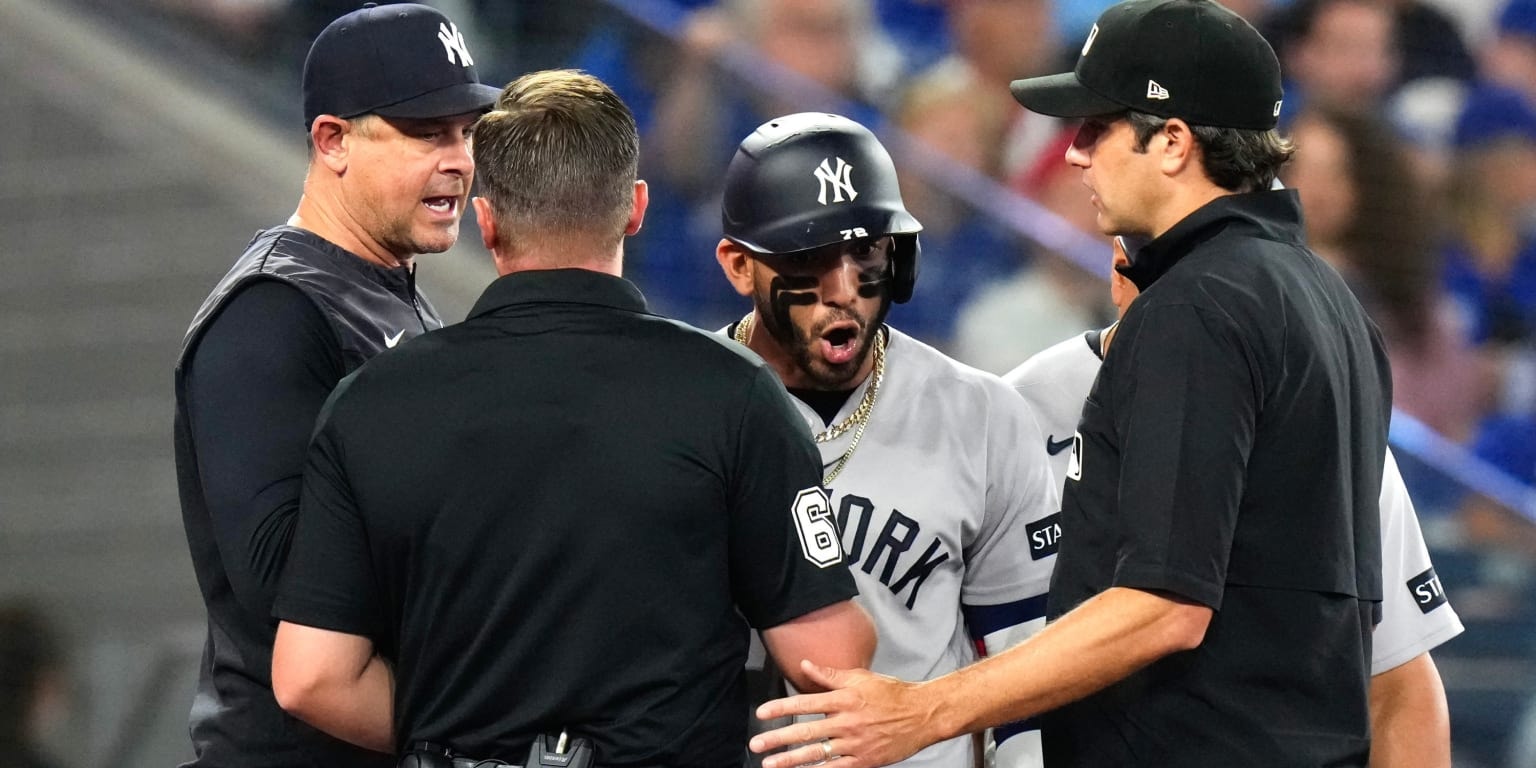
MLB’s pitch-timer rule has turned into a daily adjustment for hitters, and the Yankees’ Jose Caballero is among the players publicly wrestling with how to meet the standard in real time. The rule requires that a batter be “in the box and alert to the pitcher” by the 8-second mark, a phrase that can be read two ways by players who are accustomed to a slower, more routine reset between pitches.
Caballero, a utility man for New York, told reporters that he is not a fan of the concept, but he also believes he is following it. His focus is less on resisting the rule than on understanding what “alert” means in the moment, particularly when a plate appearance includes quick steps, small pauses, or the kind of micro-routines batters build for timing.
For Yankees Manager Aaron Boone and the rest of New York’s staff, the practical impact is straightforward: hitters must synchronize themselves to a clock that is not tied to pitch type, umpire interpretation, or individual rhythm. Pitch-timer enforcement effectively compresses the space between pitches and can magnify how long a batter takes to settle, step out, or reset their stance, even when they are making an adjustment for the next pitch.
The issue is not only whether a hitter reaches the box by the deadline, but whether they appear to be ready and engaged as the timer runs down. Caballero’s comments reflect a broader player concern that the rule’s language leaves room for perception, even if a batter believes they are doing everything required. In that sense, his approach is about reducing uncertainty, making sure there is no doubt that he is set and mentally engaged when the timer hits the critical number.
Caballero’s emphasis on seeking clarification also highlights how the Yankees are responding to league-wide officiating priorities. When rules center on seconds and readiness, teams often end up prioritizing “repeatable visuals” for hitters, such as consistent steps into the box and consistent readiness behaviors, rather than relying on comfort with personal timing. That can change batting routines without changing a hitter’s swing mechanics.
As MLB continues to enforce the pitch clock, hitters like Caballero will likely become more intentional about their in-box behavior, especially with two-strike counts and sequences in which pitchers use the clock aggressively. The Yankees, meanwhile, will look for ways to keep plate appearances moving without turning routine at-bats into a constant negotiation with the timer.
What to watch next is whether additional clarifications from MLB or consistent application from umpires further define “alert,” and whether that leads to a more uniform approach across the league. For New York, the immediate value is simple: minimizing the risk of avoidable pitch-timer violations and keeping hitters focused on pitching matchups rather than on the interpretation of a single phrase at the plate.
Why It Matters
- The pitch-timer rule can affect plate appearance quality, not just pace, because readiness and routine have to be synchronized to seconds.
- Interpretation of “alert” can influence how often a hitter feels pressured between pitches, potentially changing approach at the plate.
- For teams like the Yankees, small timing mistakes can add up over a season in an environment where umpires are working with enforcement priorities.
- As players seek clarification, the league may move toward more standardized expectations that reshape hitter habits across MLB.
Key Facts
- MLB’s pitch-timer rule includes an 8-second requirement for batters to be in the box and alert to the pitcher.
- The Yankees’ Jose Caballero says he does not like the rule’s premise but believes he is complying.
- Caballero’s concern centers on the interpretation of what it means to be “alert” in the moment.
- The Yankees’ adjustments reflect the broader league shift toward faster, clock-driven plate appearances.
- The pitch clock increases the importance of consistent pre-pitch routines for hitters.