
THE APEX TIMES
Yastrzemski’s throw hits Citi Field infrastructure, and the Mets turn a bizarre first-inning moment into a run
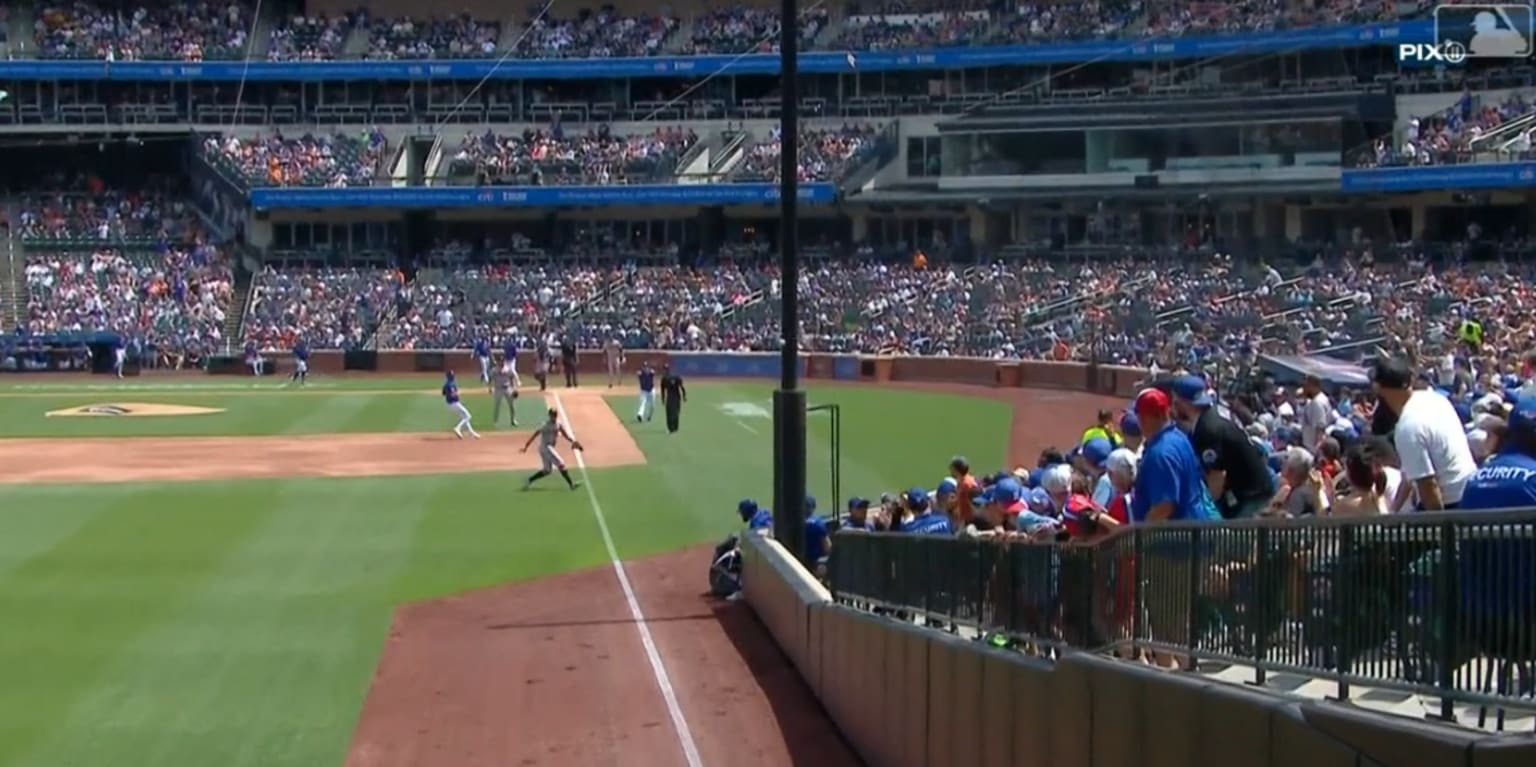
A routine relay from the left-field corner became an unusual miscue when Mike Yastrzemski’s throw struck a stanchion that supports protective netting, handing the Mets a lift in the first inning at Citi Field.
Citi Field added another chapter to the long list of oddities that can happen in ballparks, this one arriving in the first inning on a play that started as a standard outfield throw but ended with a malfunctioning kind of luck. With the Braves working through an early sequence, Mike Yastrzemski, playing outfield for Atlanta, relayed the ball from the left-field corner. The throw reached its intended area, then veered into something no fielder is expecting to target: a stanchion that supports protective netting.
According to MLB’s official game story, Yastrzemski’s throw struck that netting support, and the result was scored as an error. In baseball terms, an error like that is not just a statistical footnote. It also resets the timing of the at-bat for everyone involved, because runners are forced to react to a developing situation rather than a clean, predictable ball path. The Mets benefited from the disruption, turning the Braves miscue into a run.
The play underscored a truth that rarely makes headlines, ballparks are not just playing surfaces. They are built environments designed for fan safety and field operation, and those structures sit in the same three-dimensional space as throws and batted balls. Citi Field’s protective netting is meant to prevent errant balls from leaving the ballpark, but it also creates physical obstacles that can change how a high-speed throw behaves when it contacts the wrong part of the frame.
For Atlanta, the moment came at the worst time, early enough that it can influence how a game plan plays out. Teams typically try to establish defensive rhythm before hitters get fully settled. An error on a throw can also have a ripple effect on subsequent plays, from positioning decisions to how quickly an outfield unit can regroup. For the Mets, cashing in on an opponent’s mistake is usually less about flash and more about converting extra chances that arise when the defense loses the ball for even a moment.
There is also a psychological dimension to these plays. When a throw hits netting infrastructure, the uncertainty can be immediate, because fielders and base runners may not know, at first glance, whether the ball is still live in the normal way. The official account framed it as a bizarre first-inning error that went the Mets’ way, which suggests that whatever advantage came from the stoppage or redirected action was enough to move a runner in a way that mattered.
Yastrzemski’s role in the moment, specifically as the player committing the error, is notable because he is known as a professional, consistent presence in the Braves outfield. Errors occur to even the best defenders, but this one stood out for its uncommon target. The Mets, meanwhile, will view it as another example of why games are decided by execution under imperfect conditions, not only by who makes the better play when the ball is in the middle of the field.
Looking ahead, Mets-Braves matchups often turn on fine margins, and a game can swing on just a single inning’s worth of defensive turbulence. If the Braves want to prevent repeats, they will likely emphasize standard communication and decision-making on corner relays, especially in settings where protective structures are close enough to matter. For the Mets, the immediate takeaway is that they can capitalize quickly when Atlanta’s defense has a miscue, even when it comes in an unexpected way.
Why It Matters
- Unusual field geometry can create live-ball outcomes that turn normal defense into high-leverage moments, especially early in a game.
- Errors on outfield relays can shift runner timing and alter inning momentum for both clubs.
- For Atlanta, cleaning up communication and relay decisions becomes more urgent when a mistake directly leads to runs.
- For New York, converting one defensive disruption into a run reinforces the value of taking advantage of extra opportunities.
Key Facts
- In the first inning at Citi Field, Atlanta outfielder Mike Yastrzemski made a throwing mistake from the left-field corner.
- MLB’s official account says the throw hit a stanchion that supports protective netting.
- The play was scored as an error by Yastrzemski.
- The Mets benefited from the sequence and scored a run as a result.