
THE APEX TIMES
Zyon McCollum shuts down CeeDee Lamb as Buccaneers’ secondary turns in a Thursday Night statement
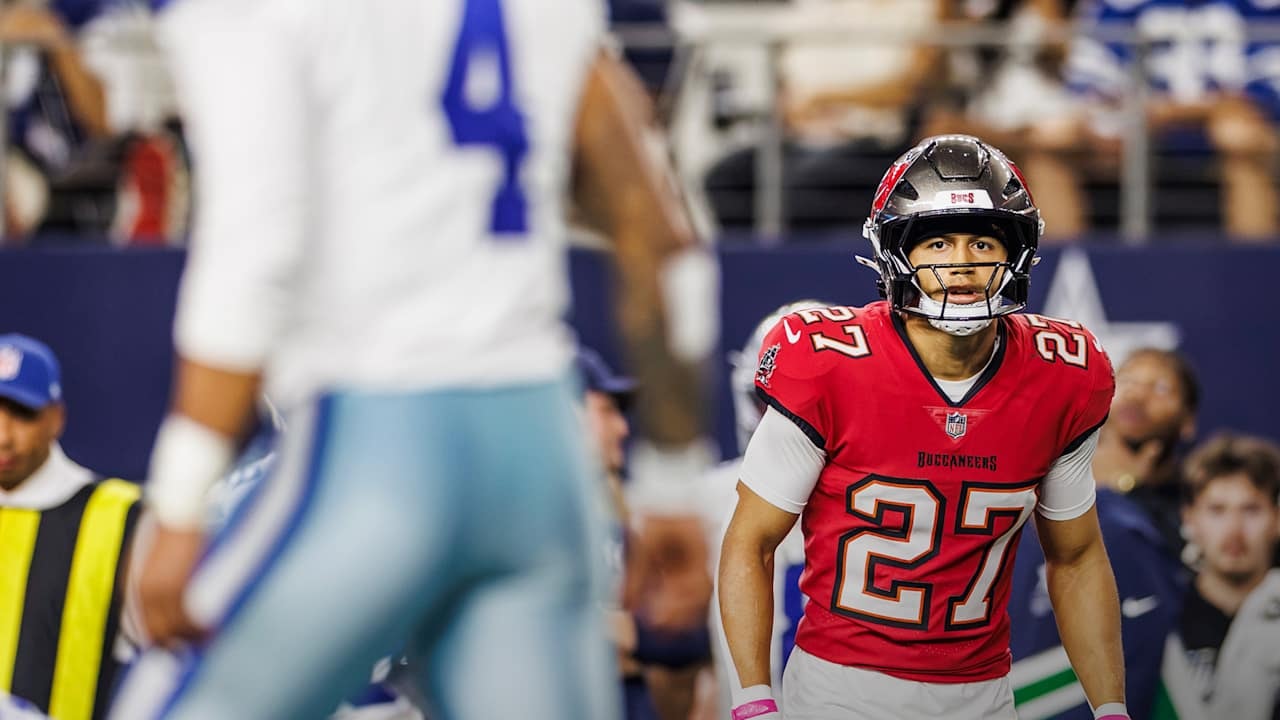
In Week Five on Thursday Night Football, Tampa Bay cornerback Zyon McCollum delivered coverage that limited Dallas stars to scraps, helping set the tone for a Buccaneers defensive surge.
What the Buccaneers needed on a short week and a national stage showed up in a matchup that mattered for both teams. In Week Five on Thursday Night Football at AT&T Stadium, Tampa Bay cornerback Zyon McCollum provided the kind of coverage impact that can reshape an offense’s plan, especially against a receiver of CeeDee Lamb’s stature. According to Buccaneers team coverage, McCollum held Lamb to zero receptions across his coverage snaps when targeted, a performance that forced Dak Prescott to move on in his progression.
The numbers from Tampa Bay’s perspective were stark. In the matchup, McCollum allowed no catches in 42 coverage snaps when Lamb was targeted, and the report ties that stretch to a 39.6 passer rating when Prescott threw his way. The report also frames the assignment as one McCollum owned consistently, describing 11 matchups with Lamb. In those clashes, Lamb was targeted once and did not record a catch, a distinction that matters because it captures both coverage tightness and the quarterback’s quick decision-making.
McCollum’s effectiveness extended beyond the headline star. The Buccaneers’ coverage report states that in five matchups against George Pickens, McCollum allowed no receptions and Pickens was targeted only once. Tampa Bay also notes that McCollum recorded a pass defensed during that stretch, suggesting the impact was not limited to a single game script but to how the Cowboys were attempting to generate completions through their deeper route options.
This kind of cornerback performance can ripple across a game. When an offense’s top option is effectively neutralized, the quarterback typically has to adjust timing, route concepts, and even where the ball moves across the field. In the Buccaneers’ account, McCollum set the tone on the back end, a theme reinforced by the description that Prescott was made to look elsewhere in his progression. That is the practical effect of coverage that limits catches, not just a box-score trivia point.
The wider context for the Buccaneers is that defensive football is built on limiting big plays, but it also depends on sustaining pressure at the point of contact. Against Dallas, Tampa Bay’s reported approach gave them a coverage anchor that could stay matched and disrupt the passing game’s rhythm. For a primetime audience, the matchup provided a clear storyline, yet the most telling detail is the combination of zero receptions on limited targets and the inclusion of metrics tied to passer rating.
For the Cowboys, the challenge coming out of this type of assignment is structural. If one cornerback consistently forces incompletions or keeps a target from turning into catches, Dallas must generate production through other matchups or by changing route distribution. For the Buccaneers, the next question is whether this becomes a repeatable profile of coverage success, especially when facing quarterbacks who can exploit alternative reads faster than Prescott had to on this Thursday.
Why It Matters
- A shutdown performance against a league-leading receiving target can force an offense to abandon its preferred passing rhythm quickly.
- For Tampa Bay, McCollum’s coverage impact highlights the secondary as a potential stabilizing unit in high-leverage primetime games.
- For Dallas, limited production from marquee receivers increases the burden on alternate routes and secondary matchups to carry the passing game.
- Primetime coverage dominance often changes how opposing quarterbacks approach targets in later weeks, especially when the same corner is trusted to repeat the assignment.
Sources
Key Facts
- In Week Five on Thursday Night Football at AT&T Stadium, Buccaneers cornerback Zyon McCollum delivered coverage that Tampa Bay said limited Cowboys receiver CeeDee Lamb.
- Buccaneers reporting states McCollum allowed zero receptions in 42 coverage snaps when Lamb was targeted, with a 39.6 passer rating on those throws.
- Buccaneers reporting says Lamb was targeted once across 11 matchups with McCollum and did not record a catch.
- Buccaneers reporting says McCollum also allowed no receptions in five matchups against George Pickens, with Pickens targeted once.
- Tampa Bay said McCollum recorded a pass defensed versus Pickens and helped set the tone by influencing where Dak Prescott looked in his progressions.