
Military Wire
MilitaryDepartment of War's Office of Strategic Capital Signs $80 Million Conditional Loan Commitment with Antheia, Inc.DOW ReleasesMilitaryHegseth Thanks Young Americans in Knoxville Who Say 'Send Me'DOW NewsMilitaryContracts for Oct. 16, 2026DOW ContractsMilitaryGeneral Harbord Submits Report on Armenia Mission (16 OCT 1919)Army NewsMilitaryArmy Task Force Partners With Acquisition Directorate to Accelerate Counter-Drone Tech in AfricaDOW NewsMilitaryFort Leonard Wood Soldier Sentenced to 28 Years in Prison for Child Pornography CrimesArmy NewsMilitaryPutting Parents in the Driver’s Seat: Empowering Army FamiliesArmy NewsMilitaryFort Wainwright Family Advocacy Team spotlights outreach, awarenessArmy NewsMilitaryHonored Division Week #6: Black Knights at home versus Florida Atlantic, honor 82nd Airborne Division with gameday patchArmy NewsMilitarySchofield Barracks Soldier Convicted of Sexual AssaultArmy NewsMilitaryUSARPAC integrates allies and partners to strengthen deterrence, deliver decisive landpowerArmy NewsMilitaryNavy Accepts Next-Generation Aircraft: Modernizing Strategic CommunicationsDOW NewsMilitaryDepartment of War's Office of Strategic Capital Signs $80 Million Conditional Loan Commitment with Antheia, Inc.DOW ReleasesMilitaryHegseth Thanks Young Americans in Knoxville Who Say 'Send Me'DOW NewsMilitaryContracts for Oct. 16, 2026DOW ContractsMilitaryGeneral Harbord Submits Report on Armenia Mission (16 OCT 1919)Army NewsMilitaryArmy Task Force Partners With Acquisition Directorate to Accelerate Counter-Drone Tech in AfricaDOW NewsMilitaryFort Leonard Wood Soldier Sentenced to 28 Years in Prison for Child Pornography CrimesArmy NewsMilitaryPutting Parents in the Driver’s Seat: Empowering Army FamiliesArmy NewsMilitaryFort Wainwright Family Advocacy Team spotlights outreach, awarenessArmy NewsMilitaryHonored Division Week #6: Black Knights at home versus Florida Atlantic, honor 82nd Airborne Division with gameday patchArmy NewsMilitarySchofield Barracks Soldier Convicted of Sexual AssaultArmy NewsMilitaryUSARPAC integrates allies and partners to strengthen deterrence, deliver decisive landpowerArmy NewsMilitaryNavy Accepts Next-Generation Aircraft: Modernizing Strategic CommunicationsDOW NewsMilitaryDepartment of War's Office of Strategic Capital Signs $80 Million Conditional Loan Commitment with Antheia, Inc.DOW ReleasesMilitaryHegseth Thanks Young Americans in Knoxville Who Say 'Send Me'DOW NewsMilitaryContracts for Oct. 16, 2026DOW ContractsMilitaryGeneral Harbord Submits Report on Armenia Mission (16 OCT 1919)Army NewsMilitaryArmy Task Force Partners With Acquisition Directorate to Accelerate Counter-Drone Tech in AfricaDOW NewsMilitaryFort Leonard Wood Soldier Sentenced to 28 Years in Prison for Child Pornography CrimesArmy NewsMilitaryPutting Parents in the Driver’s Seat: Empowering Army FamiliesArmy NewsMilitaryFort Wainwright Family Advocacy Team spotlights outreach, awarenessArmy NewsMilitaryHonored Division Week #6: Black Knights at home versus Florida Atlantic, honor 82nd Airborne Division with gameday patchArmy NewsMilitarySchofield Barracks Soldier Convicted of Sexual AssaultArmy NewsMilitaryUSARPAC integrates allies and partners to strengthen deterrence, deliver decisive landpowerArmy NewsMilitaryNavy Accepts Next-Generation Aircraft: Modernizing Strategic CommunicationsDOW NewsMilitaryDepartment of War's Office of Strategic Capital Signs $80 Million Conditional Loan Commitment with Antheia, Inc.DOW ReleasesMilitaryHegseth Thanks Young Americans in Knoxville Who Say 'Send Me'DOW NewsMilitaryContracts for Oct. 16, 2026DOW ContractsMilitaryGeneral Harbord Submits Report on Armenia Mission (16 OCT 1919)Army NewsMilitaryArmy Task Force Partners With Acquisition Directorate to Accelerate Counter-Drone Tech in AfricaDOW NewsMilitaryFort Leonard Wood Soldier Sentenced to 28 Years in Prison for Child Pornography CrimesArmy NewsMilitaryPutting Parents in the Driver’s Seat: Empowering Army FamiliesArmy NewsMilitaryFort Wainwright Family Advocacy Team spotlights outreach, awarenessArmy NewsMilitaryHonored Division Week #6: Black Knights at home versus Florida Atlantic, honor 82nd Airborne Division with gameday patchArmy NewsMilitarySchofield Barracks Soldier Convicted of Sexual AssaultArmy NewsMilitaryUSARPAC integrates allies and partners to strengthen deterrence, deliver decisive landpowerArmy NewsMilitaryNavy Accepts Next-Generation Aircraft: Modernizing Strategic CommunicationsDOW News
Back to front
Assessing German Adaptation in World War II (16 OCT 1942)
The Apex Times

THE APEX TIMES

Military/Army News/Oct 16, 5:26 PM EDT

Assessing German Adaptation in World War II (16 OCT 1942)

On Oct. 16, 1942, the Army's Military Intelligence Service (MIS) published its fifth special study - "The Development of German Defensive Tactics in Cyren...

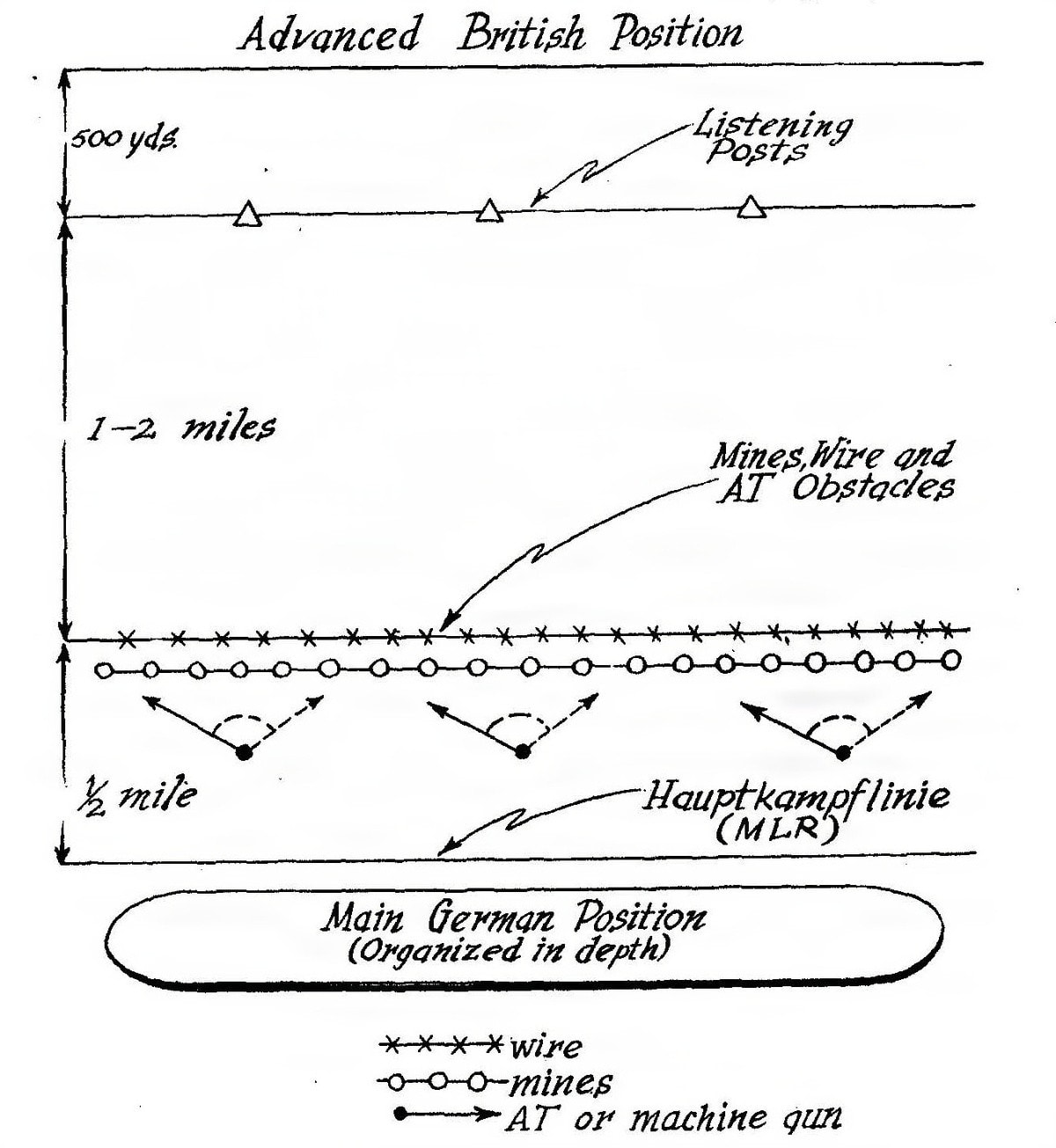
On Oct. 16, 1942, the Army's Military Intelligence Service (MIS) published its fifth special study - "The Development of German Defensive Tactics in Cyrenaica - 1941." The study concluded that German desert defense was not designed as an immovable barrier; instead, it was an integrated system organized in depth to absorb and wear down an enemy assault before launching a decisive armored counterattack.

The MIS developed its assessment through the systematic evaluation of captured German military documents. Rather than depending on wartime estimates or enemy propaganda, American intelligence analysts translated and evaluated captured German unit war diaries, operational orders, after-action battle reports, and defensive sketches. The study largely reviewed the defensive tactics developed by the Afrika Korps’ three divisional commanders: Maj. Gen. Johann von Ravenstein of the 21st Panzer Division; Maj. Gen. Walter Neumann‑Silkow of the 15th Panzer Division, and Maj. Gen. Max Summermann of the 90th Light Motorized Division. The study also looked at how the battalion and company officers executed the trio’s tactical concepts on the ground through captured documentation on tactical trials, successes, and failures in the field.

The study concentrated on the defensive lessons German forces learned through hard experience. German officers initially relied on rigid, linear defense lines that were thinly spread and vulnerable to artillery and armor breakthroughs. Early in the campaign, one German major criticized this lack of defensive preparation, writing that “our people know next to nothing about the construction of defenses” and pointing out that “positional infantry warfare is 60 percent with the spade, 30 percent with the field glasses, and only 10 percent with the gun.”

In response, the Germans abandoned continuous front lines in favor of self-contained, mutually supporting strongpoints known as Stützpunkte. These fortified centers featured all-around defense, deep minefields of antipersonnel and antitank mines, antitank ditches, and dummy positions designed to deceive Allied reconnaissance. At the tactical level, the Germans mastered the “trefoil” formation, arranging squads and platoons into triangular clusters that provided overlapping fields of fire. Furthermore, commanders established strict fire discipline; heavy weapons and antitank guns were hidden and ordered to hold their fire until enemy forces reached close ranges to ensure surprise and maximize lethal effect.

The study pointed to the paramount importance of the German 88-mm dual-purpose gun in holding these positions. Standard 37-mm and 50-mm antitank guns often proved ineffective against heavily armored British tanks, leaving the high-velocity 88-mm antiaircraft gun as the core antitank weapon. The report noted the “terrific antitank performance of the twelve 88-mm guns” during fighting on the Egyptian frontier, asserting that “the 88-mm gun, the 5th Tank Regiment, and the solid defenses of Halfaya and Point 208 won the battle for the Axis.” During critical moments, such as the defense of Capuzzo, single 88-mm guns manned by makeshift crews halted entire armor columns. As the study concluded, “without the 88-mm gun, however, none of the positions could have repulsed the British drive,” making it “the most outstanding single element in German defenses.”

"The Development of German Defensive Tactics in Cyrenaica" provided an in-depth examination of how Field Marshal Erwin Rommel’s Afrika Korps, originally trained almost exclusively in rapid offensive warfare, adapted to static desert defense in early 1941. Facing unique desert logistics and terrain, German commanders had to rapidly invent and refine new defensive practices. Consequently, in addition to laying out German defensive tactics, this study showed American military leaders that the German Army was highly adaptable, rapidly transforming its tactical doctrine to master defensive position warfare in the desert.

Article by Michael E. Bigelow, INSCOM Command Historian. New issues of This Week in MI History are published each week. To report story errors, ask questions, request previous articles, or be added to our distribution list, please contact: TR-ICoE-Command-Historian@.

Sources

Key Facts

  • Official source: Army News
  • Published: Oct 16, 5:26 PM EDT
  • Text source: Army News official source page