
THE APEX TIMES
One Team: How Army and Reserve integration delivers endurance
WASHINGTON - In an era of complex global threats, the U.S. Army is guided by a new operational framework, "How the Army Fights." This guidance organizes...
WASHINGTON - In an era of complex global threats, the U.S. Army is guided by a new operational framework, "How the Army Fights." This guidance organizes land power into four interdependent elements: convergence, strike, close battle and endurance. While all are crucial, endurance provides the ability to posture, protect and project combat power over vast distances and time in contested conditions. This critical element is where the seamless integration of the active-duty Army and the U.S. Army Reserve becomes paramount.
The concept of endurance is generated at the theater level by enabling commands like the 8th Theater Sustainment Command and is powered by the immense capacity of the Army Reserve. As the command responsible for joint sustainment in the Indo-Pacific, the 8TSC directly executes the endurance mission, setting the theater and sustaining the force. The Army Reserve, in turn, provides the bulk of the enabling capacity. Together, they form the backbone of the Army's ability to outlast any adversary.
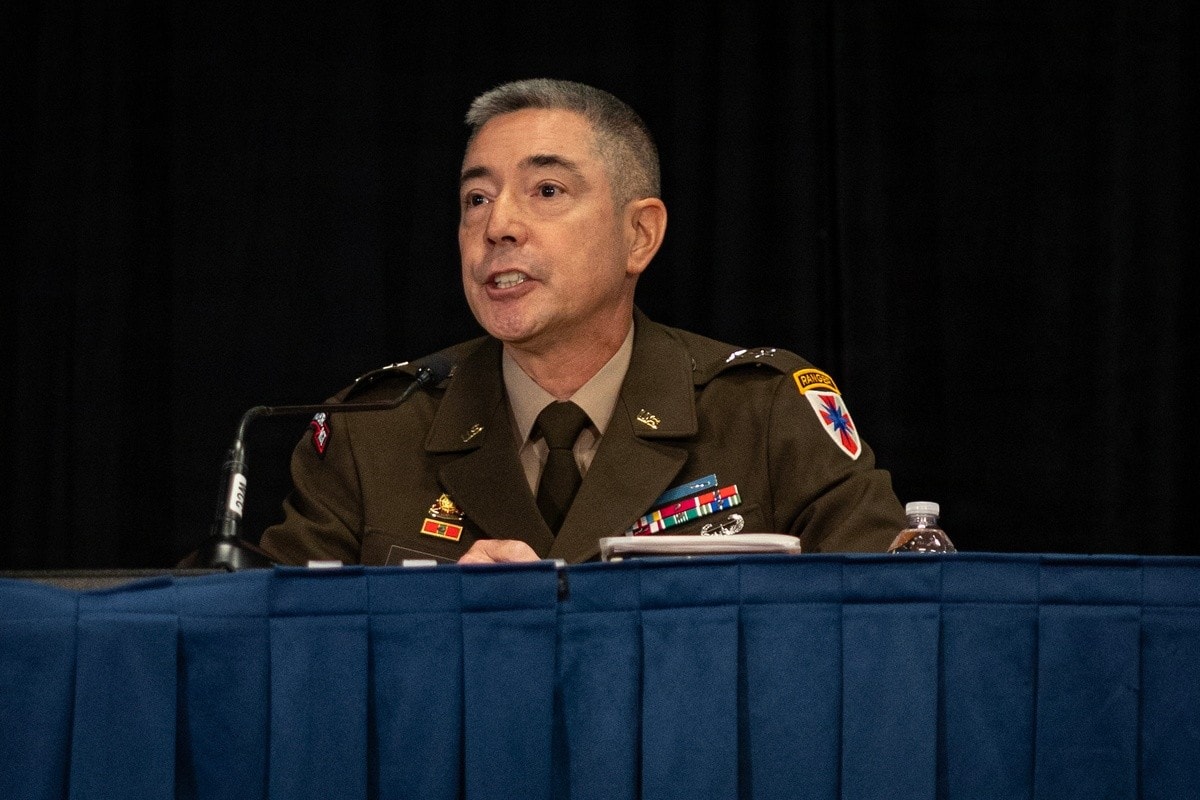
Lt. Gen. Robert Harter, chief of the U.S. Army Reserve, champions this integrated role with a simple but powerful mantra: "You go, we go." He notes, however, that a key challenge remains.
"It's getting my (active component) teammates to understand how we drive and deliver readiness," said Harter. He emphasizes that the active component simply cannot deploy or sustain operations without the unique assets housed in the Reserve.
"We are the bulk of the enabling capacity for the total Army in sustainment, logistics, medical, signal, theater engineers, civil affairs and military police," said Harter. "We're the bulk of that capability, which is why I get after the 'you go, we go' piece."
This crucial partnership is echoed by Maj. Gen. Frederick L. Crist, commanding general of the 8th Theater Sustainment Command. From his perspective, the Reserve is indispensable for achieving victory in large-scale operations.
"The decisive force where the Army achieves mass is inside of the U.S. Army Reserve," said Crist, framing the Reserve as "the foundation for [the] active-component Army to be able to create a campaign-level effect forward."
The need for integrated endurance is nowhere more apparent than in the Indo-Pacific.
"To be able to create the physical effects in this theater you must consider the distances that you're going to cross," said Crist. "Having the Reserve's sustainment capabilities postured and integrated with the 8TSC is essential to project and maintain power."
To bridge the gap between strategic posture and tactical execution, Crist emphasizes that operational readiness cannot be theoretical. Generating true endurance requires constant, realistic training alongside total force components as part of Operation Pathways.
"These exercises allow us to rehearse the integration of [Army Reserve] units into our formations," said Crist. "We're using exercises such as Balikatan and Talisman Saber to ensure that we're not just integrated so we can pull off a training event occasionally, but that we can integrate and pull off campaign-level activities throughout the year and be prepared to fight and to win."
Key Facts
- Official source: Army News
- Published: Oct 14, 11:38 AM EDT
- Text source: Army News official source page