
THE APEX TIMES
QASAS: safeguarding ammunition through vigilance and expertise
ROCK ISLAND ARSENAL, Ill.– Soldiers’ lives depend on ready access to dependable munitions. To make sure they have it, the Army relies on a network of sp...
ROCK ISLAND ARSENAL, Ill.– Soldiers’ lives depend on ready access to dependable munitions. To make sure they have it, the Army relies on a network of specialists whose expertise ensures that every munition issued to warfighters is reliable and lethal.
At the center of that enterprise is the U.S. Army Sustainment Command’s Quality Assurance Specialists (Ammunition Surveillance) program, a professional community that oversees the storage, transportation and inspection of ammo for the Army and Joint Forces.
ASC, the logistics arm of U.S. Army Materiel Command that provides warfighters with everything they need to defend this nation and its allies, plays a central role in sustaining this global ammunition enterprise. America’s Soldiers need ammunition, equipment, food, uniforms, and much more to fight and win on the battlefield or respond to natural disasters, and ASC ensures they get these supplies when and where they are needed, including through its QASAS program.
“The easiest way to put it would be a systems engineer for ammunition,” said Roger Barthel, ASC senior retail QASAS. “We’re involved from cradle to grave, from development to disposal. There are categories as items come in, as they’re being issued, and, if need be, as they’re disposed of.”
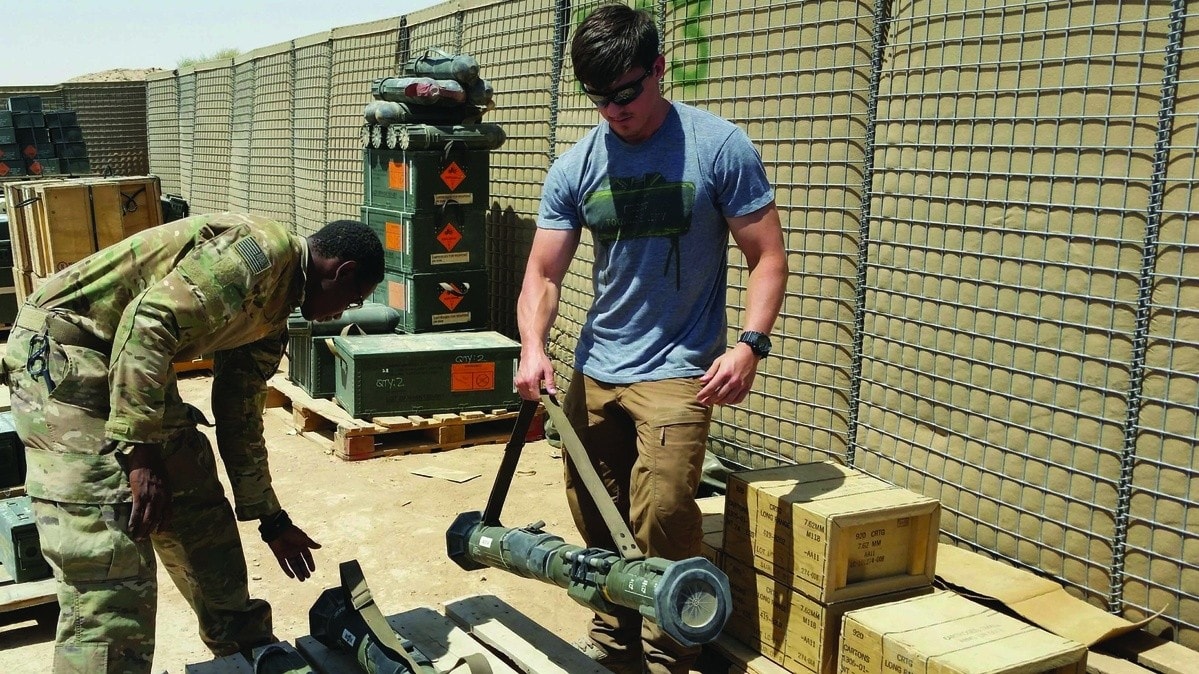
Darrin Lampman, ASC QASAS Career Program 20 position and mandatory rotation manager, concurred. “Proper ammunition surveillance requires QASAS personnel to get their hands dirty putting eyes on ammo; there’s no way around it.”
This hands-on principle anchors a mission that grows more complex, and more essential, every year, especially as ASC continues its global sustainment mission.
Across over 130 locations worldwide, QASAS teams conduct the daily inspections essential to maintaining ammunition reliability. These include area checks, surveillance workshop evaluations, vehicle and conveyance inspections, and complex site surveys that assess whether a port, depot, or training location can safely support ammunition operations.
The Army serves as the single conventional manager for munitions across all services, storing and managing ammunition for the Joint Forces through depots and other locations.
Barthel explained the sheer scale of the program. “Yes, from BBs to bombs. You have to think from the smallest thing, the smallest ammunition item, potentially inert, to the largest that basically has been in our stockpile. The Army stores everything for all services. So, there are locations, depots, that are storing torpedoes for the Navy.”
The QASAS program operates a unified global information network. When any location identifies a malfunction, deterioration issue, or explosive safety concern, the program immediately disperses the information across the ammunition community. This rapid communication prevents unsafe lots from reaching warfighters; one more way ASC ensures safe, ready ammunition is available across the globe.
As Lampman explains, “This rapid distribution of information allows all QASAS to take immediate action to suspend ammunition lots, remove them from the warfighter’s hands, and prevent any further incidents.”
It’s built on speed, clarity, and shared expertise, ensuring that a discovery in one region can protect Soldiers on the other side of the world.
Risk mitigation is central to QASAS operations. Specialists help prevent accidents during ammunition handling at training ranges, during long-term storage at depots, and in transit over public highways, railways, and waterways. They insert their knowledge early into the mission planning process, preventing failures long before they can occur.
QASAS also identify aging or compromised stocks requiring emergency destruction, reducing the risk of unintended detonation. At plants and arsenals, they act as first-line inspectors, ensuring new production meets safety and design specifications before it ever enters inventory.
Stockpile reliability is another pillar of their mission. Under the Ammunition Stockpile Reliability Program, QASAS oversee continuous evaluation of assets ranging from modern production to rounds manufactured during World War II. Extreme heat, cold, humidity, and decades-long chemical degradation all influence ammunition condition, and surveillance provides engineers with critical data for improvements. These insights allow Army commands to redirect replacement stocks, adjust production priorities, or modify components to enhance shelf life and service life. This long-term view ensures ammunition not only works today but continues to perform reliably in the future.
Lampman notes the importance of balancing technological advancement with caution, stating, “We have processes in place to assess various scenarios and worst-case impacts… the most important aspect of our job is protecting the public that we serve.”
As Army modernization continues to reshape logistics, readiness, and operational requirements, the QASAS mission expands into an even wider arena. “Obtaining new equipment that improves the warfighter’s capability should always be our goal,” Lampman says. “However, ensuring we enforce the safety standards required to safely store, handle, and issue assets while properly dealing with high explosives remains the focus of the QASAS community.”
From the narrow precision of individual inspections to the broad strategic impact of a global surveillance enterprise, QASAS expertise enables warfighters to operate with confidence in the reliability of their munitions. Their vigilance prevents accidents that don’t happen, averts the failures no one sees, and safeguards both lives and missions.
In an era of fast-moving technology, expanding global commitments, and evolving threats, one constant remains: the meticulous and continuous work of ammunition surveillance professionals is essential to sustaining the Army’s readiness- an effort that aligns fully with ASC’s mission to equip Soldiers with what they need to fight and win.
Through hands-on inspection, rapid information sharing, risk mitigation, stockpile reliability assessment, and modernization support, QASAS ensures that every munition performs when needed and that personnel handle it safely until it’s needed.
Key Facts
- Official source: Army News
- Published: Oct 14, 12:30 PM EDT
- Text source: Army News official source page