
THE APEX TIMES
Total Force Resilience Campaign: Enterprise Best Practices & Sustaining Year-Round Readiness
Pentagon, Washington D.C. - Throughout September, Army installations, tactical formations, and garrisons worldwide executed the inaugural Total Force Re...
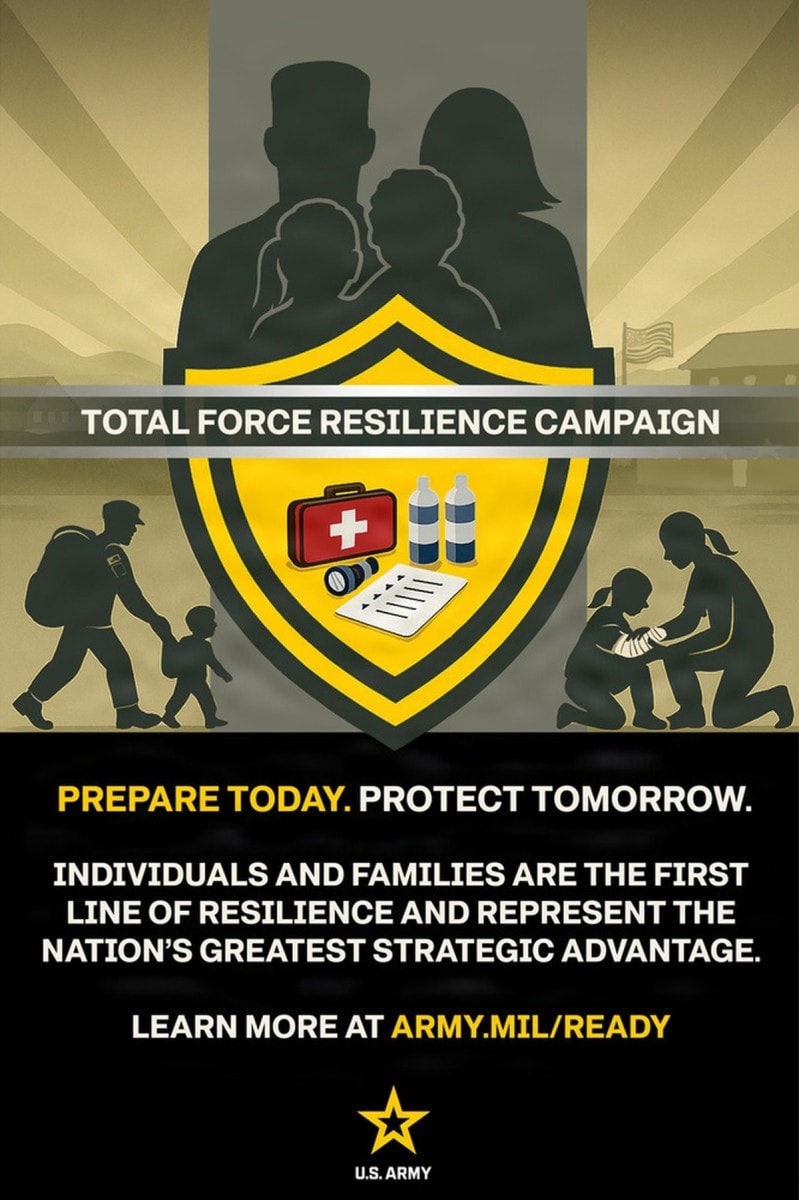
Pentagon, Washington D.C. - Throughout September, Army installations, tactical formations, and garrisons worldwide executed the inaugural Total Force Resilience Campaign (TFRC). Aligned with the 2026 National Resilience Strategy and the shared theme "Prepare Today. Protect Tomorrow," commands across the enterprise transformed emergency preparedness into a vital, combat-multiplying pillar of warfighting resilience and mission assurance.
Participant feedback and initial after-action reviews demonstrate how emergency managers, commanders and emergency management stakeholders
met the challenge, fostering inter-agency synchronization, implementing creative zero-cost education campaigns, and identifying critical lessons learned to harden our installations against all-hazard threats.
Month in Review: Operationalizing the Ready Army Tenets
Participating commands and installations operationalized the four weekly tenets of the Ready Army framework, tailoring activities to their specific geographic and mission environments:
• Week 1 (Be Informed): Installations conducted enterprise-wide accountability sweeps, tested audio outdoor warning systems (Giant Voice), and validated contact profiles across the ALERT! Mass Warning and Notification System. Commands also utilized Army Disaster Personnel Accountability and Assessment System (ADPAAS) drills and Common Operating Picture (COP) hazard mapping to identify regional weather and operational risks.
• Week 2 (Make a Plan): Units, civilians, and families developed and exercised localized emergency communication and evacuation strategies. Leaders validated emergency recall rosters and updated Continuity of Operations Plans (COOP), ensuring remote and unpaved transit corridors and utility disruptions were factored into family contingency plans.
• Week 3 (Get Involved & Train): Embracing the principle of distributed responsibility, installations integrated on-post volunteer networks with regional emergency agencies, conducting tabletop exercises (TTXs), multi-agency command briefings, and community response team orientations.
• Week 4 (Build a Kit): Formations supported 72-hour sustainment, inspecting physical supply caches across administrative duty desks, validating backup power generators and utility resilience, and distributing detailed checklists tailored to extreme regional climates.
Field Highlights, Lessons Learned & Best Practices
Reports from the field demonstrate notable resourcefulness and highlight key best practices that installations can adopt across the enterprise:
The Office of Emergency Management on some installations initiated the campaign by hosting senior-leader inter-agency synchronization summits. Bringing together regional emergency coordinators, Defense Coordinating Elements (DCE), multi-service Emergency Preparedness Liaison Officers (EPLOs), county emergency management directors, and tribal partners established baseline operational familiarity and clarified Defense Support of Civil Authorities (DSCA) statutory pathways long before a disaster occurs.
To break through adult "preparedness fatigue," installations created youth-focused initiatives partnering directly with on-post schools. Utilizing friendly, approachable campaign mascots, interactive activity workbooks, and take-home "Family Challenges," school-aged dependents became active drivers of household preparedness. Students prompted parents to physically identify home rally points, verify out-of-area emergency contacts, and confirm household supply locations, effectively turning classroom learning into tangible homefront readiness.
Demonstrating exceptional resourcefulness and operational ingenuity, emergency managers fully leveraged organic garrison communication pillars, internal digital enterprise networks, desktop notification pushes, and command information broadcasts to directly engage thousands of personnel across installation footprints. An essential best practice identified is pairing agile digital outreach with permanent, physical visual signage in high-traffic common areas, mitigating digital screen fatigue and guaranteeing continuous, reliable information access even during severe power or IT network disruptions.
To maximize installation care and response capabilities, forward-leaning garrisons demonstrated outstanding initiative by establishing synchronized, cross-directorate surge rosters. By proactively cross-training and certifying personnel across Morale, Welfare, and Recreation (MWR), the Religious Support Office, and tenant commands, installations successfully engineered rapid-activation support cadres. This collaborative approach enhances overall garrison agility, ensuring qualified, multi-disciplinary teams are postured to immediately stand-up the Emergency Family Assistance Centers (EFAC) and operate temporary reception shelters whenever community needs arise.
Rather than relying on a single, static home stockpile, best practices from remote and extreme-climate installations emphasized a three-tier 72-hour readiness posture:
• Workplace/Desk Kits: Sturdy footwear, essential prescription redundancies, compact flashlights, and portable power banks.
• Vehicle (POV) Kits: Climate-specific survival items (auxiliary water caches, thermal blankets, emergency flares/signaling, and 12V tire inflation systems) tailored for isolated travel routes.
• Residential Kits: 72-hour baseline supplies of water, non-perishable caloric nutrition, manual tools, emergency radios, and vital document binders.
Sustaining the Momentum: Resilience is an Enduring Mission
Emergency preparedness cannot be treated as once-a-year administrative exercise. Extreme weather, infrastructure outages, and security contingencies occur without warning.
Commanders, directors, and emergency managers are encouraged to sustain this momentum into routine battle rhythms:
• Incorporate ALERT! profile verification and ADPAAS briefings into routine civilian and military in-processing pipelines.
• Maintain semi-annual coordination cadences with regional civilian, mutual aid, and joint-service emergency management counterparts.
• Re-engage installation schools, youth centers, and housing communities prior to seasonal weather shifts with targeted safety reminders.
Advancing Emergency Management Plans & Sharing Command Best Practices
HQDA Emergency Management will continue to compile all installation feedback, innovations, and operational lessons learned to improve current and future doctrine, policy, and enterprise guidance.
All commands, garrisons, and emergency managers are strongly encouraged to continuously review, refine, and exercise local Emergency Management Plans (EMPs) and standard operating procedures. Integrating real-world observations and cross-jurisdictional coordination into routine planning ensures our emergency management practices remain adaptive, robust, and capable of protecting the total Army force across all hazards.
Prepare Today. Protect Tomorrow. Be All You Can Be!
Key Facts
- Official source: Army News
- Published: Oct 14, 2:05 PM EDT
- Text source: Army News official source page