
THE APEX TIMES
Veterinary Medical Center Europe trains handlers to save injured military working dogs
RAMSTEIN AIR BASE, Germany - When a military working dog is injured in the field, its handler may be the first person available to provide immediate med...
RAMSTEIN AIR BASE, Germany - When a military working dog is injured in the field, its handler may be the first person available to provide immediate medical care. Knowing what to do in those critical moments can make the difference between life and death.
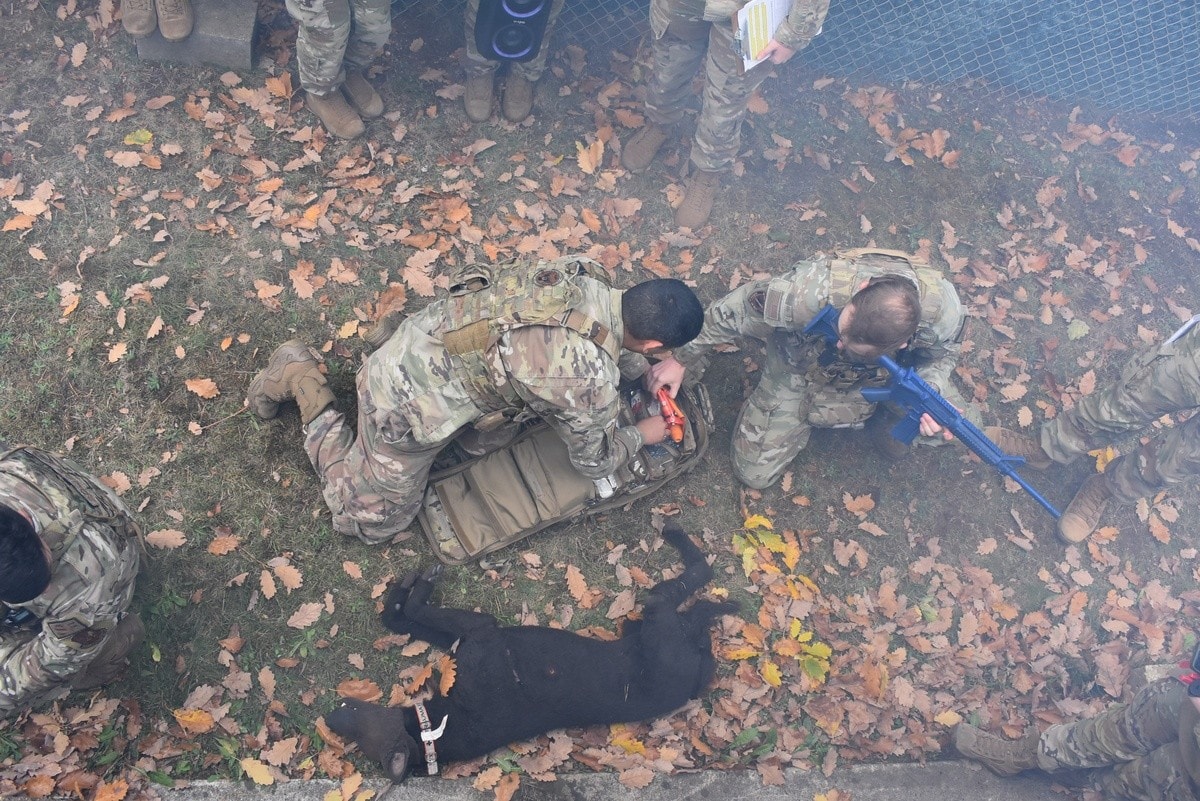
To prepare handlers for that responsibility, Veterinary Medical Center Europe conducted canine Tactical Combat Casualty Care training for more than ten military working dog handlers October 22. The one-day training combined classroom instruction with hands-on exercises designed to build confidence and reinforce the skills needed to treat injured dogs in operational environments.
The training began with approximately three hours of classroom instruction, during which participants reviewed the MARCH sequence, a systematic approach to identifying and treating life-threatening injuries. Handlers then practiced specific medical tasks before moving to practical training lanes in the afternoon.
The scenarios simulated injuries military working dogs could encounter during combat operations, including gunshot wounds and injuries caused by improvised explosive devices. Handlers practiced recognizing critical injuries, controlling severe bleeding, managing airways and addressing shock and blood loss.
For handlers, these skills are particularly important because veterinary personnel may not be immediately available when an injury occurs.
Handlers carry canine medical bags and drug cards to help ensure they have the necessary supplies and knowledge to provide initial treatment. Training reinforces how to use those supplies, administer appropriate medications and monitor the dog until a veterinarian or animal care specialist can provide further treatment.
Master Sgt. Dylan Finch, kennel master for the 86th Security Forces Squadron, said the training gives handlers an opportunity to practice skills they may not use as frequently as their primary canine duties.
Finch emphasized that retaining those skills requires regular practice. While handlers work with their dogs daily, emergency medical situations demand a different set of capabilities that must remain familiar under pressure.
Veterinary Medical Center Europe reinforces that readiness through recurring engagement with military working dog kennels. Bolin said veterinary personnel conduct training during their regular visits to the kennels for weight checks and preventive care, with K9TCCC frequently serving as a training topic.
The recurring instruction gives handlers opportunities to refresh their knowledge, practice essential procedures and prepare to respond when veterinary support is not immediately accessible.
Military working dogs support security and operational missions alongside their handlers, making canine medical readiness an important part of mission readiness. By combining veterinary expertise with practical, scenario-based instruction, Veterinary Medical Center Europe helps ensure handlers are better prepared to provide lifesaving care when their canine partners need it most.
Key Facts
- Official source: Army News
- Published: Oct 26, 3:17 AM EDT
- Text source: Army News official source page